By Analyst Team · Updated 2026-07-19 · 9 min read
Picture this: You finally cut the cord, sign up for an IP-TV provider you found through a quick search, and for the first week everything works beautifully. Then the buffering starts. Channels vanish. Customer support goes silent. Within a month, you're back to paying for cable — frustrated and out of pocket.
This scenario plays out for thousands of viewers every year. The IP-TV market has exploded — so much choice that making the right call feels impossible. But here's the truth: finding a reliable ip-tv provider isn't about luck. It's about knowing exactly what to check before you hand over your payment information.
In this buyer's guide, we strip away the marketing hype and give you a practical framework. We cover the criteria that actually predict whether a provider will deliver smooth streaming, the warning signs that scream "avoid," and how to match a service to your budget and viewing habits. By the end, you'll know whether the best ip-tv provider 2026 for your living room is a premium package or a budget-friendly option — and exactly how to spot the difference.
LIMITED TIME AVAILABILITY
Unlock Full ip-tv provider Access
Secure special promotional rates instantly before the window closes. Lock in your pricing model today before plans return to standard regional metrics.
Why Many People Regret Their IP-TV Provider Choice
Regret usually stems from one root cause: buying based on channel count rather than performance. A provider listing 20,000 channels might look irresistible, but if their infrastructure can't handle peak evening traffic, you're stuck staring at a spinning wheel during the Champions League final.
Common complaints we hear from ip-tv provider reviews reddit threads include sudden service shutdowns without notice, poor EPG (Electronic Program Guide) integration making channel navigation a nightmare, and bait-and-switch pricing where the monthly rate doubles after the first billing cycle.
Another major regret factor is compatibility. Some providers only work with specific apps or locked-down devices. You might purchase a plan only to discover it requires a MAG box or a custom APK that's not available on your smart TV's app store. Always verify device support before committing.
Criteria That Should Drive Your IP-TV Provider Decision
Server Infrastructure and Uptime Reliability
The single most important factor is the provider's server setup. A good cheapest ip-tv subscription still needs robust servers — cheap doesn't have to mean unreliable. Look for providers that mention load-balanced servers, CDN integration, and multiple data center locations. If they're vague about infrastructure, that's a red flag.
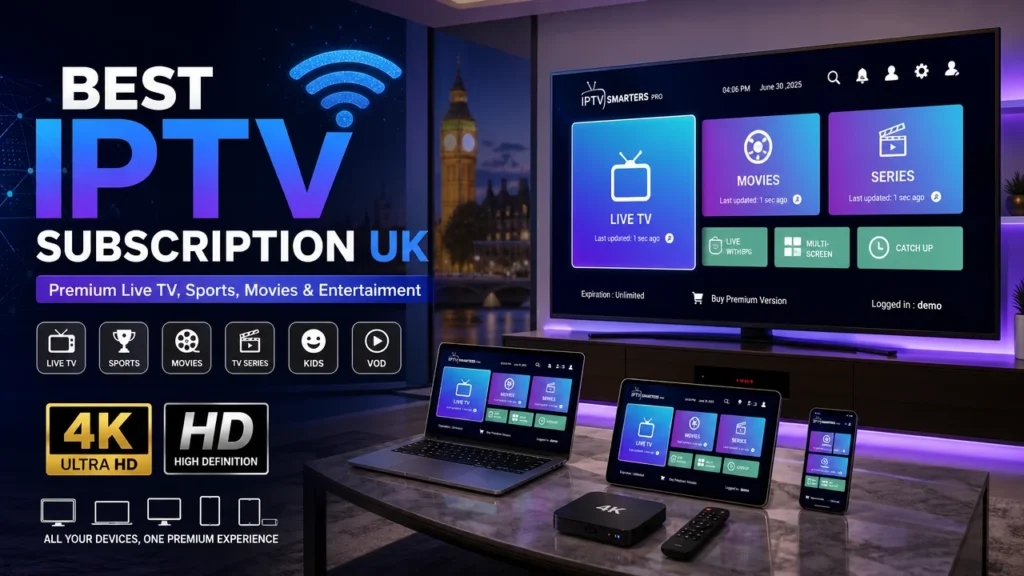
Ask about uptime guarantees. While no service offers 100%, any provider worth considering should have transparent status pages or at minimum a 99% uptime track record. The image below shows a typical provider dashboard where you can monitor server health — something transparent services often offer their users.
Channel Lineup Quality vs. Quantity
More channels don't mean better value. A provider offering 5,000 well-curated channels with proper categorization will serve you far better than one with 20,000 channels full of dead streams and foreign shopping networks you'll never watch.
Focus on the specific content you need. If you're looking for an ip-tv provider for sports, verify they carry your preferred leagues — Premier League, NFL, NBA, UFC, Champions League — in your language. Ask about catch-up features for sports matches. Many dedicated sports fans also want multi-angle coverage or stats overlays.
Streaming Quality and Buffering Performance
Resolution claims are meaningless without consistent bitrate. A provider might advertise "4K" but deliver 720p upscaled content that looks soft on a large screen. Look for providers that specify exact streaming protocols — HLS is standard, but some use more efficient WebRTC or MPEG-DASH for lower latency.
Check if they offer adaptive bitrate streaming, which automatically adjusts quality based on your internet speed. This feature is essential if you share bandwidth with other household members. Without it, a sudden network spike means frozen video instead of a slight quality dip.
What You Need to Know About the Current Market
The IP-TV landscape in 2026 has matured significantly compared to the Wild West days of 2020. However, it's still a mixed bag of legitimate services and short-lived operations. The best ip-tv provider 2026 trends show a shift toward niche services — providers specializing in specific regions or content types rather than offering everything to everyone.
Regulation is tightening in several countries. Some providers now require KYC verification (identity documents) to comply with local streaming laws. This is actually a good sign — it indicates they're operating with some level of legitimacy and plan to stay around. Services that accept only cryptocurrency and refuse any verification are higher risk.
Pricing has also shifted. While you can still find a cheapest ip-tv subscription for under $10/month, the average quality service now ranges between $12-$25/month for a standard package. Premium providers with dedicated apps, multi-device support, and built-in VPN compatibility charge $30-$50/month. The market has stratified — you get what you pay for.
Unlock complete high-definition information and priority access packs.
Claim This Special Offer for ip-tv provider →Questions to Ask Before Buying an IP-TV Provider
Before you hit that "Subscribe" button, ask the provider these five questions directly through their support channel. Their responses — or lack thereof — will tell you everything.
1. Can I test the service before purchasing? Any confident provider offers at least a 24-hour trial for a nominal fee or free. Avoid providers that offer only "demo accounts" with limited channels — those often hide buffering issues on the full service.
2. What is your refund policy? Legitimate services offer at least a 7-day money-back guarantee. If they say "no refunds" or "store credit only," consider it a major warning.
3. How many simultaneous connections are allowed? Most providers allow 1-2 simultaneous streams on standard plans. If you need to watch on multiple TVs while kids stream in other rooms, you need a plan that explicitly supports 4+ connections.
4. Do you provide an official app or only third-party player URLs? Proprietary apps generally offer better integration, EPG support, and catch-up features than generic players like VLC or IPTV Smarters.
5. Where are your servers located? Servers geographically closer to you mean lower latency and faster channel switching. European providers offering US channels often have specific server locations optimized for different regions.
Warning Signs to Spot in an IP-TV Provider
Some red flags are obvious; others require a bit of digging. Here's what to watch for:
No social media presence or community. Reliable providers have at minimum a Telegram group or Discord server where users discuss issues. Complete radio silence suggests they're prepared to vanish overnight.
Prices that seem too good to be true. A lifetime subscription for $50? Run. Server maintenance, bandwidth, and content licensing costs real money. Impossible low prices mean either the service will crash within weeks or they're collecting payment data for other purposes.
Aggressive upselling. Providers that constantly push "premium packages" or "VIP channels" during the checkout process are usually milking every dollar before their operation folds. Stick to transparent pricing without hidden tiers.
Outdated website design with broken links. If a provider can't maintain their own website, they certainly aren't maintaining servers. Check for recent blog posts or news updates — dated content from 2023 suggests neglect.
Comparison Table of Available ip-tv provider Options
Note: Prices and features are market averages as of mid-2026. Actual offerings vary. Always verify specific terms with the provider before purchase.
Recommendation by Budget and Needs
Pros of Premium Plans
- Dedicated apps with consistent updates
- Reliable catch-up and VOD libraries
- Multi-device support for whole family
- Responsive 24/7 customer support
- Higher bitrate with true HD/4K content
Cons of Premium Plans
- Higher upfront annual commitment cost
- May include channels you never watch
- Setup can require technical knowledge
- Overkill if you watch only a few channels
- Some still lack official app store presence
For cord-cutters on a budget ($8-$15/month): Look for a provider that offers a cheapest ip-tv subscription without sacrificing core channels. Prioritize services with at least 3-day catch-up and 1-2 simultaneous streams. Many budget providers now offer reasonable quality — just ensure they have a refund policy in case the service underperforms.
For sports fans ($20-$35/month): Your priority is an ip-tv provider for sports that offers low-latency streams. Sports content requires sub-30-second delay to avoid spoilers from neighbors cheering. Look for providers that specifically advertise "sports optimized" servers or "UFC/PPV included" packages.
For families and multi-device households ($30-$50/month): Go with a premium Gold or Platinum tier. The extra cost buys you 4+ simultaneous streams, catch-up across all major channels, and proper VOD libraries. This is where the iptv service vs cable tv comparison swings heavily in IPTV's favor — you get more flexibility at roughly half the cable cost.
How to Maximize Your IP-TV Provider Investment
Once you've chosen your provider, setting up correctly makes all the difference. Here are actionable tips to get the best experience:
Use a wired connection where possible. Ethernet always beats WiFi for streaming stability. If you must use WiFi, ensure your router supports 5GHz and is in the same room as your streaming device. The difference in buffering frequency is night and day.
Invest in a quality streaming device. A $30 Fire Stick handles IPTV fine, but a $100 Nvidia Shield or Apple TV 4K delivers noticeably smoother navigation, faster channel switching, and better upscaling. The device matters more than most new users realize.
Set up a VPN for privacy. While we don't endorse illegal streaming, even legitimate IPTV traffic benefits from VPN encryption to prevent ISP throttling. Some providers even recommend specific VPNs that work best with their servers — ask their support team.
Learn your player's advanced settings. Whether you're using TiviMate, IPTV Smarters, or a provider's proprietary app, dig into settings. Adjust buffer size (2000-3000ms is a good start), enable hardware decoding, and configure EPG refresh intervals. These small tweaks dramatically improve daily use.
Final Subscription Window:
Main Offer Today →Affiliate Disclosure: Clicking this secure link verified by our network supports our team through standard partnership terms at zero extra cost to your invoice.
Frequently Asked Questions About ip-tv provider
1. How do I find a reliable ip-tv provider that doesn't buffer?
Focus on providers that openly discuss their server infrastructure — look for mentions of CDN integration, multiple data centers, and load-balanced servers. Read ip-tv provider reviews reddit threads from the last 3-6 months for real user reports on buffering during peak hours. Always take advantage of trial periods to test during evening hours (7 PM-11 PM) when servers are under heaviest load.
2. What is the cheapest ip-tv subscription that still offers good quality?
Budget-friendly options in the $8-$12/month range from providers like Apollo Group TV and Beast IPTV offer decent quality with 3000-5000 channels. The trade-off is limited catch-up (0-3 days) and fewer simultaneous streams. For true value around $12-$15, consider services that offer yearly discounts — some drop to under $100 annually while maintaining stable streams.
3. How to choose an ip-tv provider for sports channels specifically?
Sports fans should prioritize low-latency streaming (under 30 seconds) and verify specific league coverage. Ask the provider directly: "Do you carry all Premier League matches in English commentary?" and "Is UFC/Boxing PPV included or extra cost?" The best ip-tv provider for sports will have dedicated sports categories, multi-language options, and catch-up features for matches you miss live.
4. Can I get an ip-tv provider that works legally in my country?
Legality depends heavily on your country and the provider's content licensing. In the US, only services like YouTube TV, Hulu Live, and Sling TV operate with full licensing. Most third-party IPTV services operate in a legal grey area. If you require 100% legal streaming, stick to the major licensed platforms. If you're comfortable with grey-market services, research your local laws first — some European countries enforce stricter penalties than others.
5. What's the difference between IPTV and cable TV for modern households?
The iptv service vs cable tv comparison favors IPTV in flexibility (watch on phones, tablets, TVs), price (typically 30-50% cheaper), and channel variety. Cable wins in reliability (no buffering), consistent quality, and local channel availability without additional setup. For households that value customization and multi-device streaming, IPTV is usually the better choice.
6. Where to buy ip-tv legally without risking scams?
Stick to providers that accept credit cards (offering chargeback protection), have a visible physical address, and maintain active social media communities. Avoid services that only accept cryptocurrency or gift cards — those are red flags for short-lived operations. Check ip-tv provider reviews reddit and dedicated IPTV forums for verification before purchasing.
7. Is there a best ip-tv provider 2026 that works on all devices?
Providers like TiviMate companion services, IPTV Smarters, and VLC-compatible services work across Android TV, Fire Stick, Apple TV, iOS, Android phones, and PC. True universal compatibility is rare — most providers excel on 2-3 platforms. Before subscribing, confirm your primary device (e.g., Fire Stick 4K) is explicitly supported with a dedicated app or easy URL setup.
8. How do I set up a VPN with my ip-tv provider for better privacy?
Choose a VPN that offers dedicated IPTV-optimized servers (NordVPN and ExpressVPN are popular choices). Configure the VPN on your router for whole-home protection, or install it directly on your streaming device. Important: test your VPN connection speed before subscribing — some VPNs add latency that can cause buffering. Also verify your provider allows VPN usage, as some block known VPN IP addresses.